In May 2026, Il Grumolo had the pleasure of hosting Gola Hundun's artistic research. for an artist residency as part of the first edition of CARMI.CO – Carmignano Contemporanea, a contemporary art project that brought five artists into close contact with farms, wineries and cultural sites throughout the Carmignano area.
CARMI.CO was created to dissolve the boundaries between contemporary art and territory: farms, vineyards, museums and historical places became active parts of the artistic process. Not simply backgrounds, but living places to be experienced and interpreted.
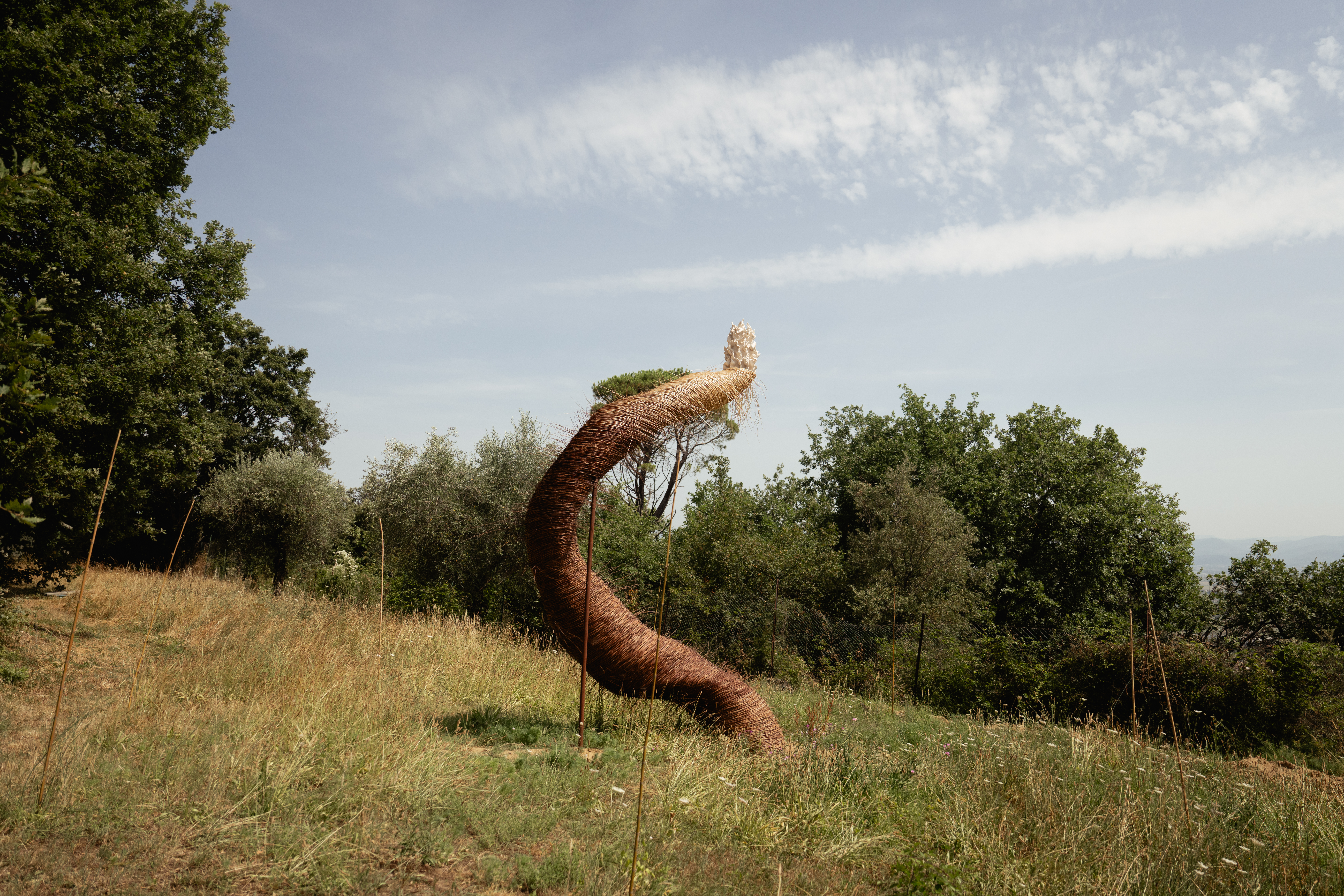
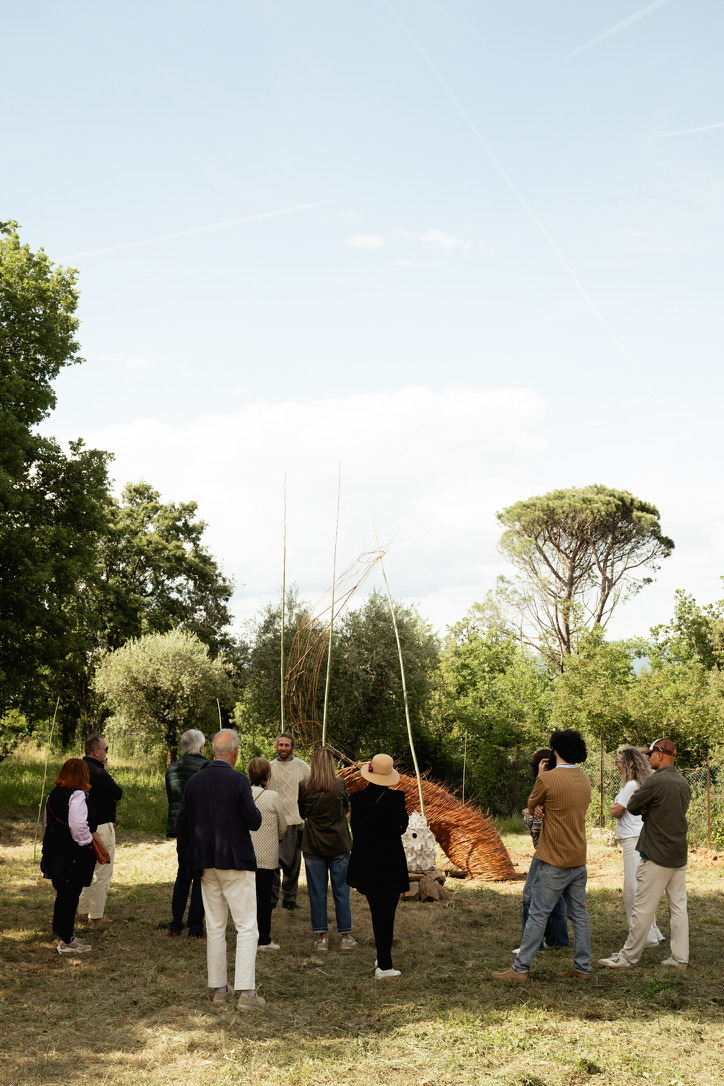
It was within this context that Gola Hundun created The Dance of Vanth, a site-specific environmental artwork conceived especially for Il Grumolo. Dance of Vanth, un’opera ambientale site-specific pensata da Gola Hundun per Il Grumolo.
Il Grumolo lies in a landscape where nature and history are deeply intertwined. Within the farm’s land stands an ancient Etruscan burial mound, now covered by flowers, olive trees and other vegetation.
This ancient presence — a kind of threshold between different times and worlds — became an important starting point for the artist’s work.
At the heart of the sculpture is Vanth, an Etruscan deity associated with passage, thresholds and transformation.
In Gola Hundun’s contemporary interpretation, Vanth becomes more than a figure associated with the passage between life and death. She becomes an energy moving across different forms of existence: earth and sky, matter and spirit, human and more-than-human life..
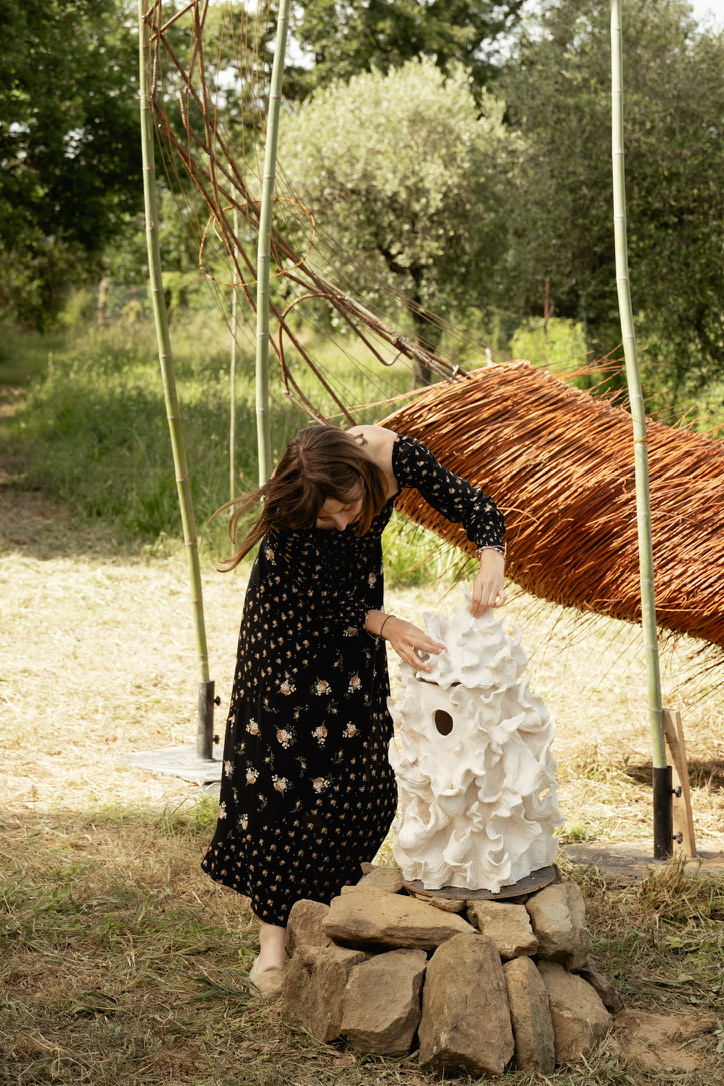
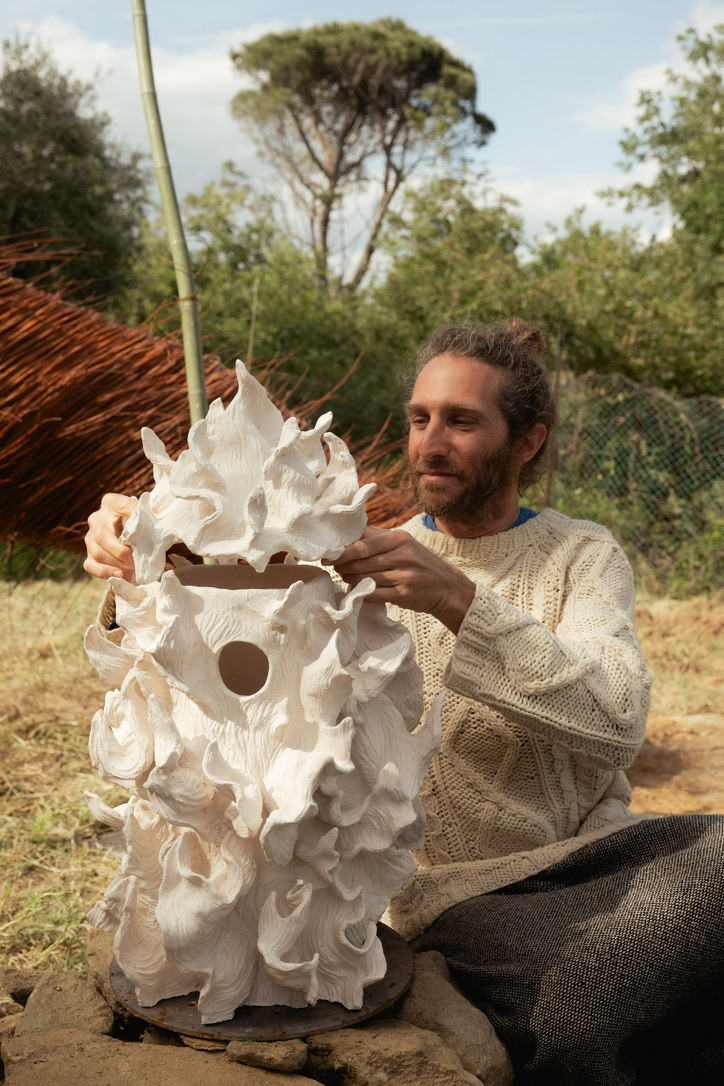
From the earth, the artwork rises upward in a dynamic form, almost like a vortex that seems to dance. At its summit rests the torch, crafted from semi-refractory clay. Traditionally, the torch carried by Vanth illuminates the path to the afterlife; in the artist’s vision, however, it is transformed into something entirely different: a nest.designed to provide shelter for birds and small animals.
In particular, for the creation of this element, the artist drew inspiration from nests of scops owlssmall nocturnal birds of prey known for their distinctive, melancholic call — the characteristic “chiù” that echoes through the landscape as evening falls. The tip of the torch features a movable cap that can be lifted to check whether the nest is inhabited.
Ed è proprio qui che l’opera cambia natura.
It is not only something to look at: it is something that can be inhabited.
Birds, insects, and other small forms of life can move through it, find shelter within it, and transform it over time. The artwork thus becomes a small shared ecosystem, destined to evolve alongside the surrounding nature and the new trees that will be planted around it.
The artwork will be completed inOctober 2026, on the occasion of its inauguration, when it will be accompanied by a natural architecture made up of cherry trees, symbols of life and rebirth. Their presence will help define and frame the space of the artwork, evoking the subtle boundary between the world of the living and that of the afterlife.
This idea lies at the heart of Gola Hundun's artistic research..
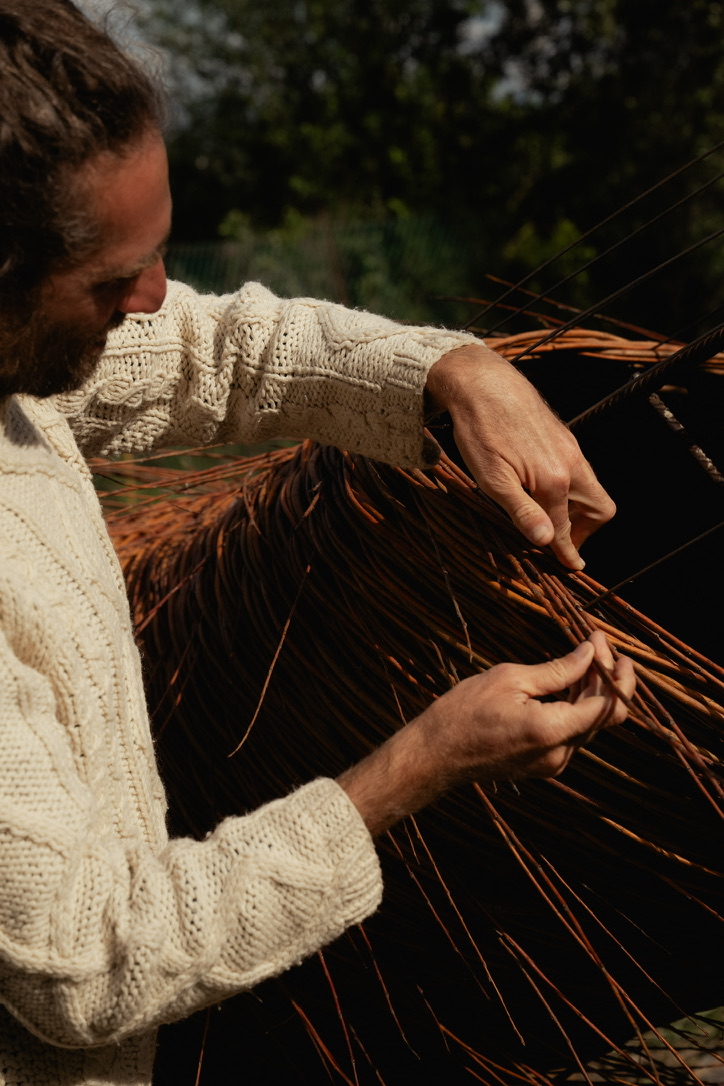
His work explores the biosphere, ecology and interspecies communication, questioning the separation we often create between human beings and the rest of the living world.
In his practice , aesthetics and ecology meet: what might normally be seen as decoration can become structure, shelter and habitat.
the wind, the sounds, birds in flight, growing plants, animals passing through and people encountering the work. The sculpture is completed by everything that happens around it:.
The dance therefore no longer belongs only to the artist.
It becomes a shared dance.
Il Grumolo is a small farm shaped by the meeting of agriculture, nature, culture and a desire to share the story of this landscape.
Here we produce olive oil and honey, care for bees, grow flowers and create experiences and educational activities designed to bring people closer to farming and the natural world.
But the land also preserves a much older history: the Etruscan burial mound within the property is a reminder of a landscape inhabited and transformed by human beings for thousands of years.
Past and present, agriculture and culture, human beings and other forms of life coexist within the same landscape.
This is why, Dance of Vanth belongs so deeply to this place.
It is not an artwork simply placed at Il Grumolo. It is an artworkborn from an encounter with the place. And perhaps its most important invitation is this:
not to see nature as something that surrounds us,
but to recognise ourselves as part of a much larger community of living beings.